Groog: the AI avatar that embodies and enhances Abacus know-how
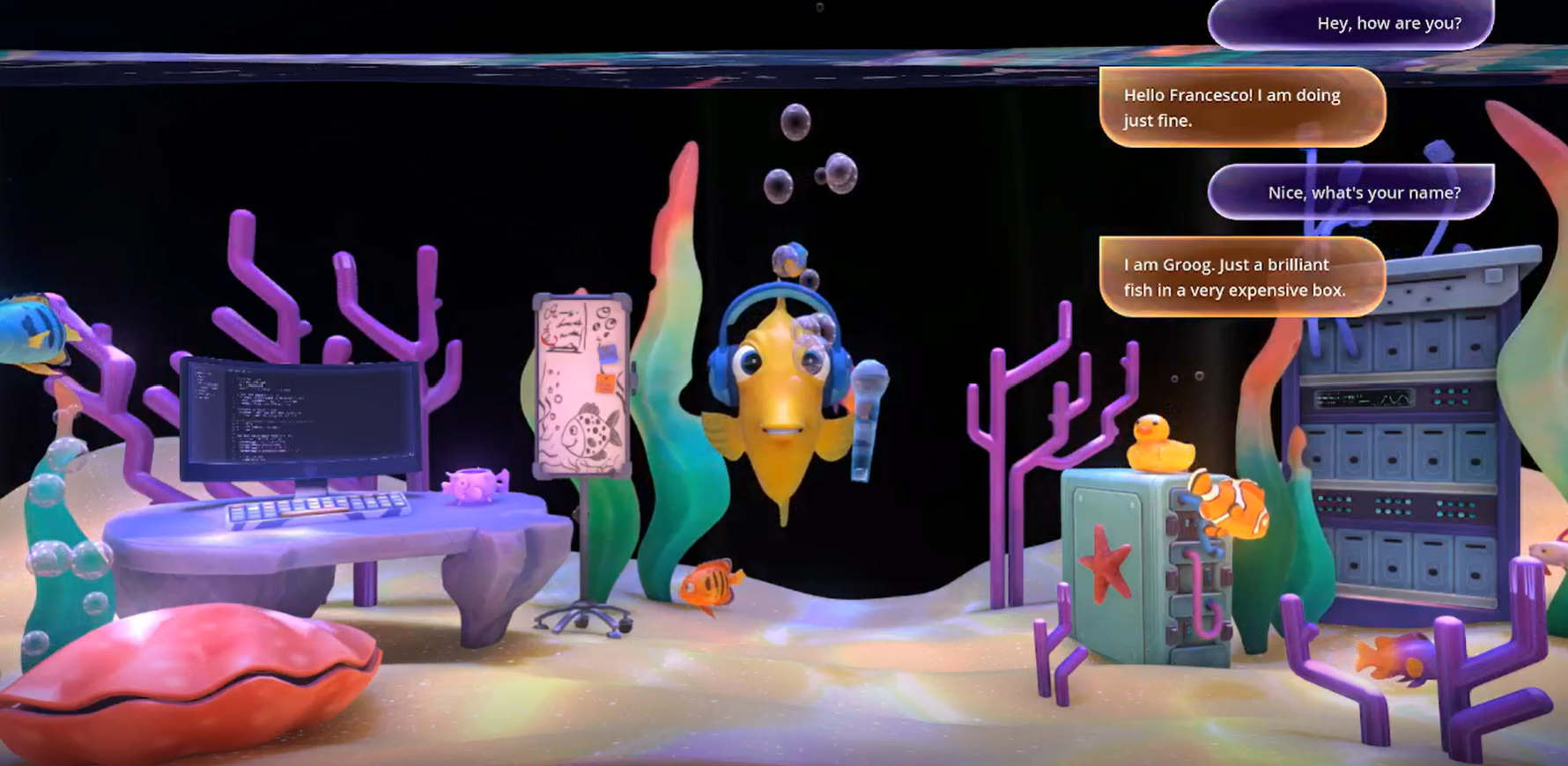

"Unlike a traditional avatar, the Aquatar Groog doesn't represent a specific person or role, but an entire organization. With Groog and its aquarium, we are exploring how, in the future, interaction between people, organizations, and machines might take place."
Challenge
Traditional interfaces of business systems (ERP, HR, CRM) require users to navigate menus, fill out forms, and manually search for information across different modules. For example:
Each person must learn where to find the information they need;
Systems show the same interface to everyone, regardless of role or specific needs;
Financial, HR, and operational data are often isolated in separate sections;
Systems respond only when queried, rather than anticipating needs.
Abacus wanted to explore a radically different paradigm: an intelligent conversational interface that recognizes people, understands their roles, and proactively provides contextualized information.
Abacus Research AG is a Swiss company that has been successfully developing ERP solutions and products supporting business management for over 35 years, in key areas such as finance, HR, administration, sales, production, and services. With Groog, Abacus wanted to explore the future of human-machine interaction.
Our AI Solution
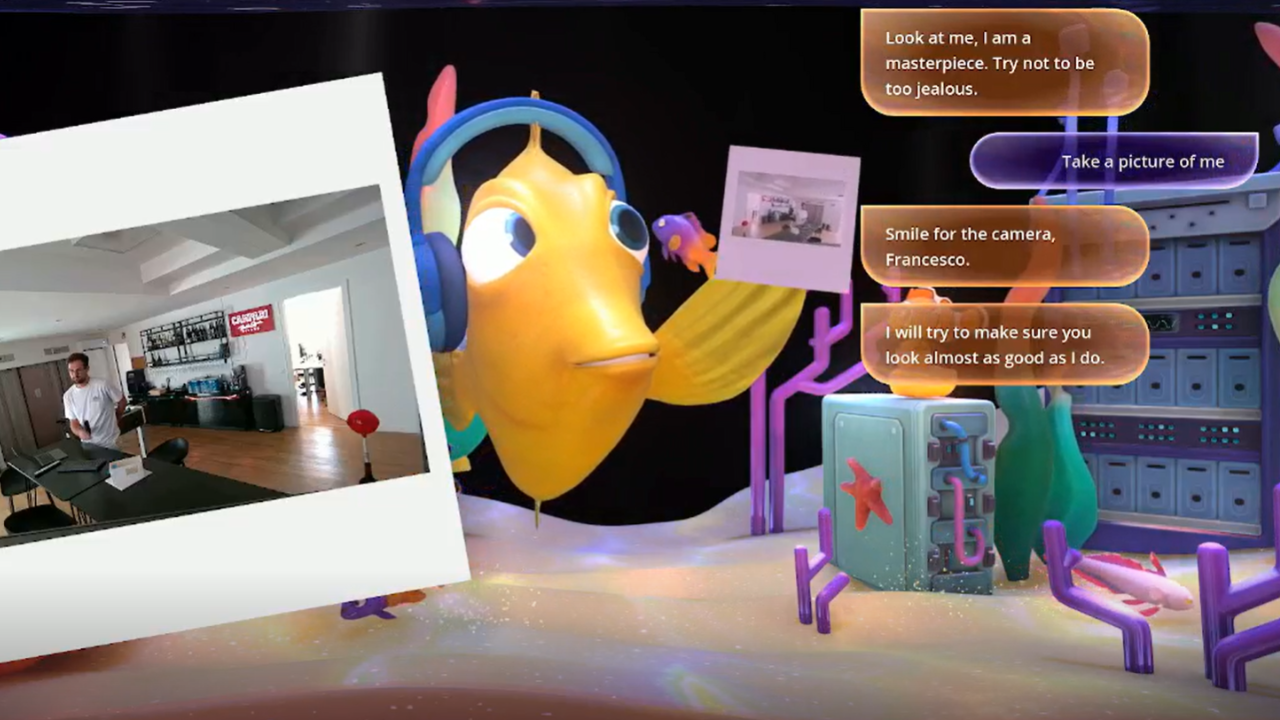
Artificialy supported the development of Groog, graphically designed and animated by the Ticino-based studio Macaco, equipping the AI assistant with numerous advanced features through different technologies:
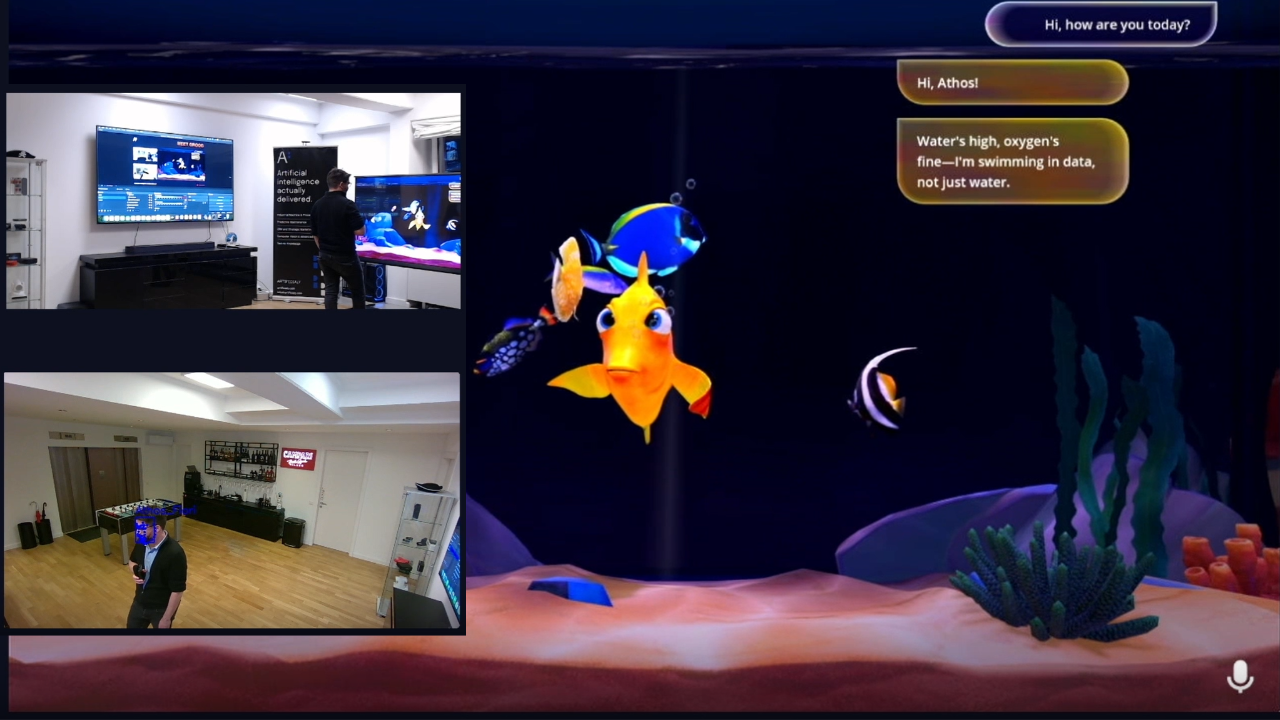
Multi-person facial recognition. Groog simultaneously identifies multiple people (faces and voices), distinguishes between real humans and images, and recognizes when someone enters or leaves the scene;
Advanced language understanding. It uses a local Small Language Model trained by Artificialy that understands Swiss German and can be configured with company-specific content. The voice is synchronized with realistic lip movements;
Integration with business systems. Groog integrates with ERP systems such as Abacus and AbaNinja, acting as an agent for finance, HR, and other functions. It knows roles and permissions, so it only shows data the user is authorized to see;
Persistence across environments. It can "follow" a person across different aquariums (screens) within the building, maintaining the context of the conversation;
Visitor management. For unrecognized individuals, it offers registration via QR code and a smartphone form;
Movement interpretation. It detects gestures and movements to understand intentions (e.g. when someone walks away).
Results
Groog is operational and already integrated into Abacus's environments, where it is used to improve employees' day-to-day experience and visitor reception, thanks to:
A natural, conversational interface
Context-based personalization
Intelligent proactivity
Guaranteed security and privacy
An engaging user experience
Groog represents a pioneering experiment in how organizations might interact with their information systems in the future.

"Groog represents a fascinating experiment in how AI interfaces can become more natural and contextual. It's not just a chatbot with a graphic interface: it's an intelligent agent that recognizes people, understands their role in the organization, and provides personalized information based on permissions and context. It's the first step toward business systems that 'know' who you are and what you need."
You may also be interested in

AbaClik: your AI-powered voice assistant for back office operations