Manufacturing 5.0: optimizing industrial processes through AI

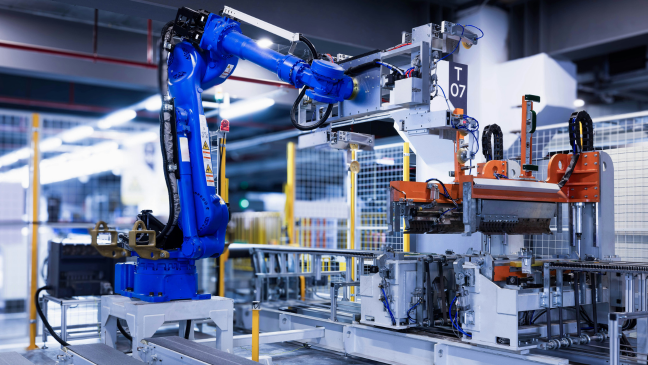
The manufacturing industry is undergoing a new phase of profound transformation. After mechanical automation, electronics, computerization, digital interconnection, and IoT, Manufacturing 5.0 introduces a decisive element: intelligent collaboration between humans and machines.
Artificial intelligence does not replace human experience and judgment; it enhances them - freeing people from repetitive tasks and allowing them to focus on higher-value activities.
Of course, AI is not a universal solution to be applied indiscriminately. It is a powerful tool that must be integrated strategically - after thoroughly understanding business processes, identifying real bottlenecks, and assessing if and where AI can generate tangible value.
Phase 1: process analysis and identification of bottlenecks
Industrial optimization through AI does not begin with technical work on models, but with process understanding. Before implementing any technology, it is essential to analyze, map, and model operational workflows to identify inefficiencies.
AI assessment in industrial processes
Every industrial context has its own specificities. An anomaly detection algorithm may be valuable in a quality control setting but completely irrelevant if the main issue lies in production planning. The analysis phase serves exactly this purpose: distinguishing symptoms from root causes and focusing efforts where the impact is greatest - selecting the most appropriate methodology or technology.
Key questions that emerge during the audit:
Which processes require the most repetitive human intervention?
Where do errors have the highest cost in terms of waste or rework?
Which critical information is scattered or difficult to access?
Where do the most frequent and costly machine downtimes occur?
Only by answering these questions is it possible to design an optimization pipeline that delivers measurable results.
At Artificialy, we adopt an end-to-end approach that starts with direct client involvement. Through dedicated AI Discovery Workshops, we analyze existing processes, listen to operational needs, and understand the daily challenges teams face. Only after this diagnostic phase can we determine whether AI is the appropriate solution or whether more effective organizational or technological interventions exist.
To evaluate AI adoption, we relate two factors: the cost of AI error and how explicit the knowledge is. AI performs well when the potential error is not critical and the rules are clear; if the impact is high, human supervision is required, while AI is not recommended when errors are costly and knowledge is poorly defined.
A practical example: a manufacturing client engaged us to optimize stock management. After two in-depth workshop sessions, we mapped the entire inventory model - including seasonal variables, reorder times, logistical constraints, and space limitations. Only then were we able to design a targeted intervention combining predictive forecasting and reorder threshold optimization.
Phase 2: AI applications for industrial optimization
Once challenges and opportunities have been identified, AI can be applied in different ways depending on the specific complexity. We have mapped some of the main categories of intervention.
Predictive maintenance: preventing machine downtime
When machines frequently break down and recovery times lead to costly downtime, predictive maintenance becomes a game changer. Instead of waiting for failures or performing generic scheduled maintenance, algorithms trained on historical data and real-time sensor inputs predict when a component is about to fail.
This prediction makes it possible to act in advance - ordering spare parts and scheduling maintenance at times of minimal production impact. Machine learning models analyze patterns in parameters such as vibration, temperature, energy consumption, and more to identify early warning signals of malfunction.
Anomaly detection and computer vision: automated quality control
In manufacturing, traditional visual quality control represents a significant bottleneck. One or more human operators must inspect each piece, checking parameters such as color, edges, surfaces, and dimensions. This process is slow, prone to human error (especially after hours of repetitive work), and consumes time and energy that could be devoted to higher-value activities.
Computer vision - the branch of AI capable of processing images and videos - trained on large datasets can detect anomalies with greater precision than humans. Microscopic defects, subtle color variations, structural imperfections: the machine becomes superhuman, synthesizing millions of examples into a single evaluation model.
Tangible benefits:
Drastic reduction in waste
Inspection times reduced by 70–90%
Standardization of processes, no longer dependent on operator attention variability
Reallocation of human resources to supervision and continuous improvement
A useful parallel comes from the medical field: an experienced radiologist will see around 100,000 radiological images in a lifetime. An AI algorithm can be trained in a short time on 100 million images - covering a vast range of cases, including rare diseases. This training gives AI “superhuman” capabilities, combining the knowledge accumulated by tens of thousands of professionals over a lifetime.
Knowledge sharing: technical chatbots and knowledge management
In engineering and manufacturing companies, technical knowledge is often fragmented and personal: it resides in the minds of senior engineers, in forgotten PDF documents, in inaccessible technical manuals, sometimes even in different languages. This creates bottlenecks when an operator needs to solve a problem and must find the right expert or dig through disorganized archives.
An AI-based chatbot trained on company technical documentation (manuals, procedures, resolved cases, and best practices) democratizes access to know-how. The operator asks a question in natural language and receives a contextualized answer, with references to original sources for further exploration, in the operator’s own language.
This not only accelerates problem-solving but also standardizes procedures and reduces dependency on individual key people.
Case study: AiPipe for Casale SA
A concrete example of human-machine collaboration is the project developed for Casale SA, a leading company in chemical plant engineering. The challenge involved optimizing piping design: given the layout of plant equipment such as pumps, reactors, or tanks, how can pipes be arranged in a compliant and optimal way?
Piping design must respect physical constraints (pressure, temperature, materials), regulatory requirements (safety, maintenance accessibility), and economic considerations (minimizing bends and pipe length to reduce material and installation costs). Traditionally, this task was handled by Senior Piping Engineers, who designed layouts manually based on their experience. The problem? Not only the time required, but also the lack of standardization: different engineers proposed different solutions, with no objective way to determine the most optimized one.
Through intensive workshops, the Artificialy team captured the technical know-how of senior engineers and translated it into computational rules and constraints. The result was AiPipe, a system that automatically generates optimized piping layouts based on defined criteria (minimum length, safety, maintainability).
The efficiency gains exceeded initial expectations. Design time was drastically reduced, and plant costs decreased thanks to more compact and efficient layouts. But what happened to the Senior Piping Engineer? No replacement by machines.
AI did not eliminate the human role - it transformed it. Instead of spending months manually designing pipes, engineers now use AiPipe to quickly generate multiple alternative solutions, explore them, compare them, and validate the final option. Their added value has shifted from execution to strategic supervision and innovation: experimenting with new configurations, simulating complex scenarios, and focusing on high-level engineering decisions.
This is the paradigm of Manufacturing 5.0: humans remain at the center, with a human-in-the-loop ensuring control, validation, and creativity, while AI handles computational complexity and repetitive iterations.